
Call for Papers: Heavy Vehicle Transport & Technology Forum Invites Abstracts
The Heavy Vehicle Transport & Technology Forum is pleased to invite you to its 18th biennial international symposium.
Short abstracts (300 to 500 words) are due on April 19, 2024. Please see the following call announcement for more details or visit the website to submit an abstract.
Join us at HVTT18 to tackle current challenges in the development of S2MART road freight transport systems, ensuring they are Sustainable, Safe, Modern, Adaptable, Resilient, and Trustworthy. This four-day collaborative event will be hosted by the Université Laval, located in historic Québec City, Canada, from May 26 to 29, 2025.
From Bike Lanes to Freight Trains, CA Secretary of Transportation Toks Omishakin (’22) Thinks in Connections
March 1, 2024
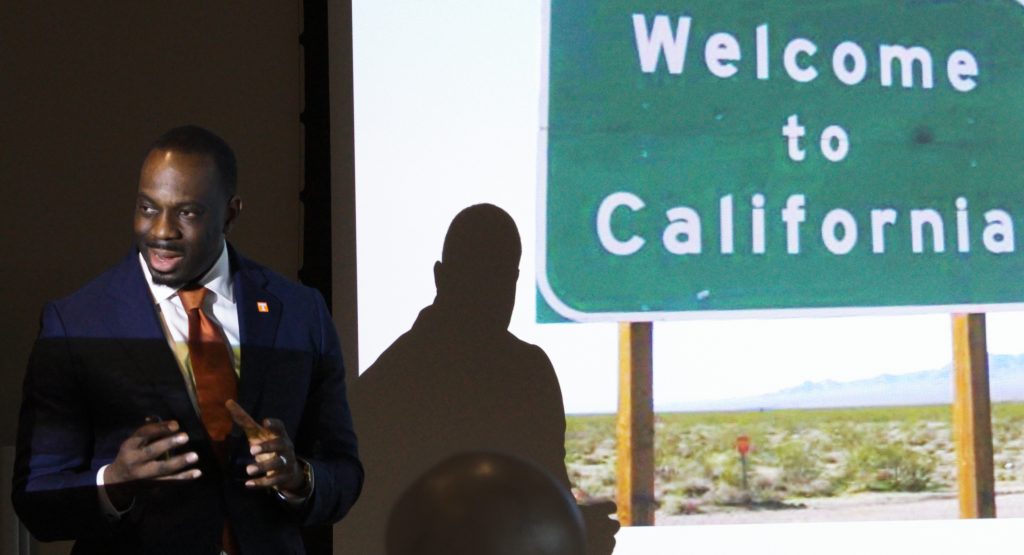
At the invitation of ISSE and the Department of Industrial & Systems Engineering, California’s Secretary of Transportation, Dr. Toks Omishakin, visited campus on March 1, 2024, to give a talk titled “Supply Chain California—The Next Frontier.” He discussed how California is addressing its supply chain issues and the impact that has on supply chains in Tennessee. Dr. Omishakin presented California’s Transportation “Core 4”—Safety, Equity, Economic Prosperity, and Climate Action. The Core 4 guides all investment decisions from the state’s transportation agencies.
The talk was sponsored by three programs housed within Tickle College of Engineering: Center for Freight Transportation for Efficient & Resilient Supply Chain (FERSC), Center for Transportation Research (CTR), and Institute for a Secure & Sustainable Environment (ISSE).
Dr. Omishakin is a Knoxville native and earned his PhD here in Industrial Engineering. He will be inducted into the Department of Industrial & Systems Engineering Hall of Fame in April.
New Research Project to Assist Disadvantaged Communities Confronting Environmental Health Challenges
February 14, 2024
Led by Chien-Fei Chen, research associate professor and director of energy and environmental justice at the University of Tennessee’s Institute for a Secure and Sustainable Environment, a diverse team is making significant strides towards addressing critical environmental health and energy burden challenges in underserved communities. This initiative has been recognized with a substantial $1.7 million grant from the Wellcome Trust Foundation, UK, a global charitable entity established in 1936. This funding coincides with the Foundation’s commitment to invest $16 billion in advancing scientific research by 2032. It also underscores the project’s alignment with global efforts to foster sustainable futures, particularly amidst the pressing climate and energy crisis. Read more…

Research Highlights

Jie Wu and Qiang He won a $280k USGS 104g project based on an ISSE seed project: Developing a sensor platform for rapid on-site detection of field-relevant levels of pfas in the environment.

$440k Foundation for Food and Agricultural Research Funds “A multi-source remote sensing-based framework and decision-support tool for flash droughts and floods under climate change” for ISSE, UTIA researchers

2022-2023 ISSE Annual Report to THEC

ISSE’s 2022-23 Annual Report to Tennessee Higher Education Commission is now available online.
ISSE continues to implement its five-year strategic plan to increase its research, educational, and outreach activities at the University of Tennessee. ISSE will promote the development of policies, technologies, and educational programs that will address and help remedy critical environmental issues around the world. We will strengthen our emphasis on cross-disciplinary collaborations that will help bring about global sustainability and environmental equity and justice.
Quick Look – ISSE Centers & Programs
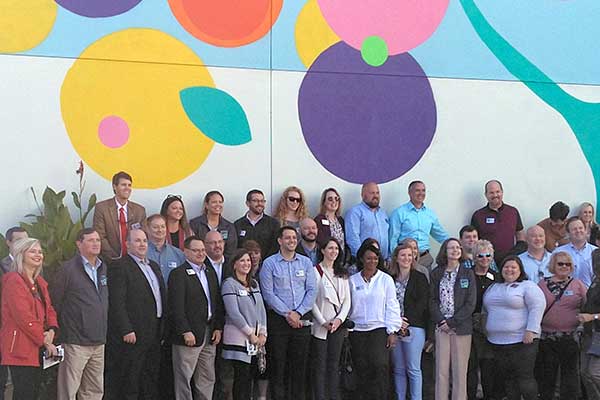
Appalachian Leadership Institute is a comprehensive leadership and economic development training opportunity for people who live or work in Appalachia and are passionate about helping their communities thrive. Appalachian Leadership Institute Fellows participate in an extensive training curriculum developed by the Appalachian Regional Commission in partnership with the University of Tennessee, Knoxville; The Howard H. Baker Jr. Center for Public Policy; Tuskegee University; and Collective Impact.

UTK and the UT Center for Industrial Services proposed the East Tennessee Initiative for Smart Energy Management (ETISE) to promote the integration of smart manufacturing for energy management through technical assistance and workforce training. The goal is to create a regional model to integrate smart manufacturing in energy management systems into energy-related business practices. ETISE is funded by the Department of Energy through the Office of Energy Efficiency & Renewable Energy (EERE), Industrial Efficiency & Decarbonization Office (IEDO), Oak Ridge National Laboratory (ORNL), and the Advanced Materials and Manufacturing Technologies Office (AMMTO).
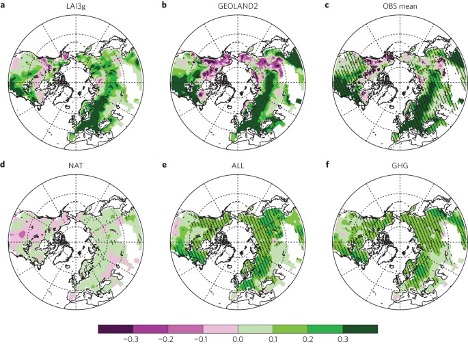
ISSE Climate Change Initiative Climate change is one of the most critical challenges faced by humans and our planet. Researchers at ISSE, working closely with the Climate Change Science Institute at Oak Ridge National Lab, are advancing our understanding of climate change and its impacts on human and natural systems. We use Earth system modeling, integrated ground and remote sensing observations, and advanced data analytical tools to study climate change and its effects on water availability, soil moisture, wildfires, and vegetation. Team members are Drs. Yaoping Yao, Yulong Zhang, Jiafu Mao, Joshua Fu, Mingzhou Jin.

DriveElectricTN promotes the adoption of electric vehicles for fleets and individuals across Tennessee with a goal of getting 200,000 EVs on TN’s roads by 2028. An autonomous program of TNCleanFuels, DriveElectricTN is supported by 60+ stakeholders from across Tennessee and the United States, with focus areas such as EV Awareness, EV Policies & Program, and EV Infrastructure intended to achieve precise, targeted development goals for electric vehicles in our state. DriveElectricTN and Knoxville Electric Vehicle Association volunteers chat with Ijams Nature Center visitors during a Drive Electric Earth Day Showcase. The new Ford Mustang Mach-E, Ford’s latest and most visible electric car is pictured in the background.
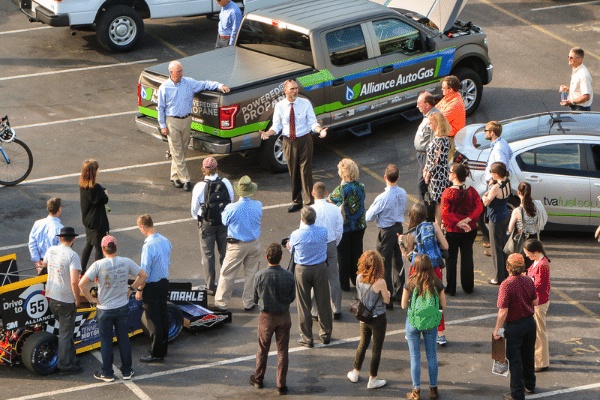
East Tennessee Clean Fuels mission is to increase the use of cleaner American fuels and vehicles and energy-saving transportation technologies to improve air quality and health, curb dependence on imported petroleum and support Tennessee’s economy. More specifically, we work to implement alt fuel projects in East Tennessee and work to make ETCleanFuels a sustainable coalition of involved participants from across East Tennessee. We serve as fleet guides to navigate alternative fuels and advanced vehicle technologies in the 21st century. ETCleanFuels is a nonprofit and a designated participant in U.S. DOE’s Clean Cities Program.

FEWSUS stands for International Research Coordination Network to Create Transdisciplinary Nodes of Food-Energy-Water to Support Sustainable Urban Systems. FEWSUS is funded by the US National Science Foundation. The grant, awarded to faculty and scientists at the University of Tennessee and Oak Ridge National Laboratory, supports the development of an International Research Coordination Network, designed to facilitate transdisciplinary, multinational communications and accelerate the development and transfer of multisectoral data, standards, analysis tools, new technologies, and a trained workforce among differently urbanized countries.
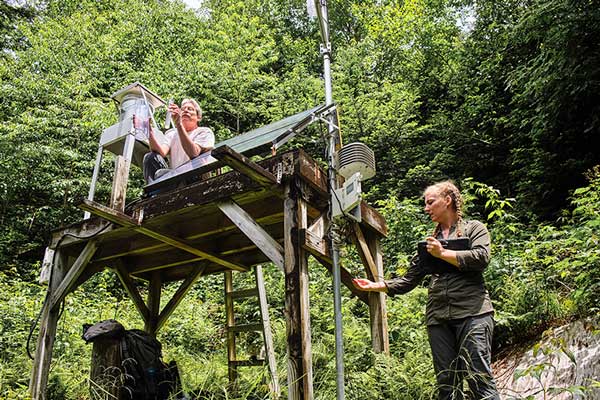
The Tennessee Water Resources Research Center (TNWRRC) is a federally designated state research institute supported in part by the U.S. Geological Survey. It serves as a primary link among water-resource experts in academia, government, and the private sector. Our staffs’ backgrounds are broad, deep, and highly diversified, allowing TNWRRC to establish a range of productive partnerships. TNWRRC is housed within the Institute for a Secure and Sustainable Environment (ISSE) at the University of Tennessee.
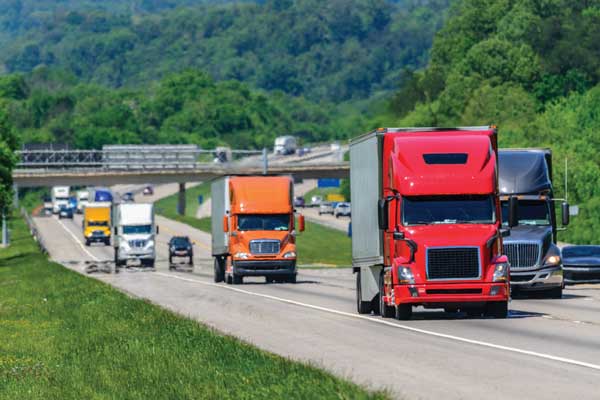
FERSC is a Tier 1 University Transportation Center consortium led by the University of Tennessee, Knoxville. Its focus is the Infrastructure Investment and Jobs Act (IIJA)’s research priority, Improving Mobility of People and Goods as its primary area. The consortium supports the DOT Strategic Goals of Economic Strength and Global Competitiveness as the primary focus and Equity and Transformation as the secondaries.

Energy and Environmental Justice (EEJ) is dedicated to interdisciplinary exploration into social justice, clean energy, accessibility to renewable resources, and infrastructure resilience. EEJ experts examine social-psychological and policy factors that influence energy and environmental justice, particularly in water systems, built environment, energy efficiency, microgrids, electric vehicles, and solar technology adoption. EEJ’s research initiatives empower academics, communities, utilities, and policymakers alike, fostering a shared commitment to equitable access to clean energy and a sustainable future.
ISSE Magazines & Annual Reports
Sustainability News
UT Team Helps Nissan Find ‘Second Life’ for EV Batteries
Have We Crossed a Dangerous Warming Threshold? Here’s What to Know. Recent temperature rises have come close to a key benchmark: 1.5 degrees Celsius. It’s a bad sign for the world’s climate goals, but it’s not game over. Not yet.
EECS Professor Kai Sun has been named an IEEE Fellow in recognition of his contributions to power grid stability analysis and control.
Upcoming Events
April 11 – 2024 Global Engagement Summit Workshops, Student Union. Register here.
May 9 – Drive Electric Tennessee Momentum Summit (Murfreesboro, TN) -> Registration & information available here.
Sept 16 – Third Annual ISSE Research Conference, UT Conference Center Building
Sept 19-21 – 2nd EXCET Workshop & Conference, Knoxville