Students and researchers with the University of Tennessee’s Food-Energy-Water for Sustainable Urban Systems initiative, or FEWSUS, are taking their work beyond the classroom through international study, collaborative research, and new educational programs.
Recent study trips to Argentina and Panama gave students opportunities to see how food, energy, water, and waste systems are managed in different agricultural and community settings.
In Argentina, the group explored climate-smart food-energy-water approaches in the Mar del Plata-Balcarce region. Visits included commercial vegetable growers, smallholder farms, dairies, row-crop operations, and research partners. Students also learned about food recovery and reuse through the NODO network, which collects surplus produce from farms and businesses and redistributes it to food banks, shelters, and other social organizations.
In Panama, students were introduced to circular agriculture and sustainability across a range of ecological and socioeconomic settings. The group visited Indigenous and non-Indigenous farming communities, the Universidad Tecnológica de Panamá, the Juan Díaz Wastewater Treatment Plant, and Esri Panamá. Students observed applications ranging from coffee, cacao, rice, and yucca production to geospatial technologies for forest management and large-scale waste-to-energy and waste-to-fertilizer systems.
Those experiences complement new coursework at UT—recent offerings have included Circular Bioeconomy in Agriculture and Resilient Agriculture and Forest Systems, along with the continuing Nexus of Food, Energy and Water course.
FEWSUS also brought researchers together for a workshop focused on Biophysics for Living Soils: Regeneration and Health. Participants from UT, Tennessee State University, Oak Ridge National Laboratory, and international partner institutions discussed several potential collaborations.
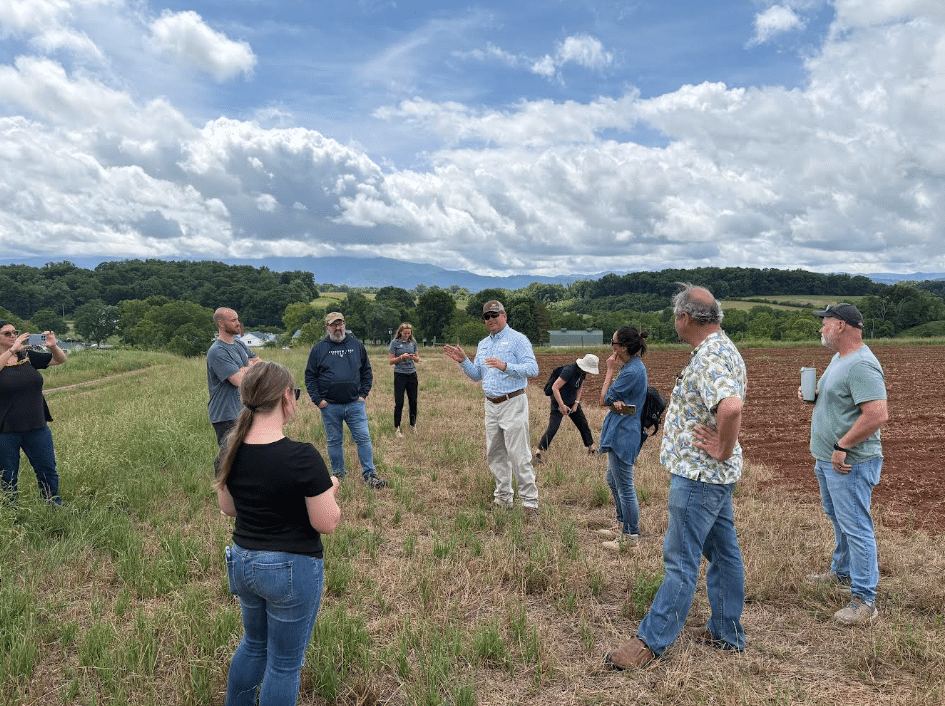
The group also toured the Northeast Tennessee AgResearch and Education Center and UT’s Hurricane Helene flood-recovery research sites in East Tennessee, where they observed field testing involving a variety of soil amendments.
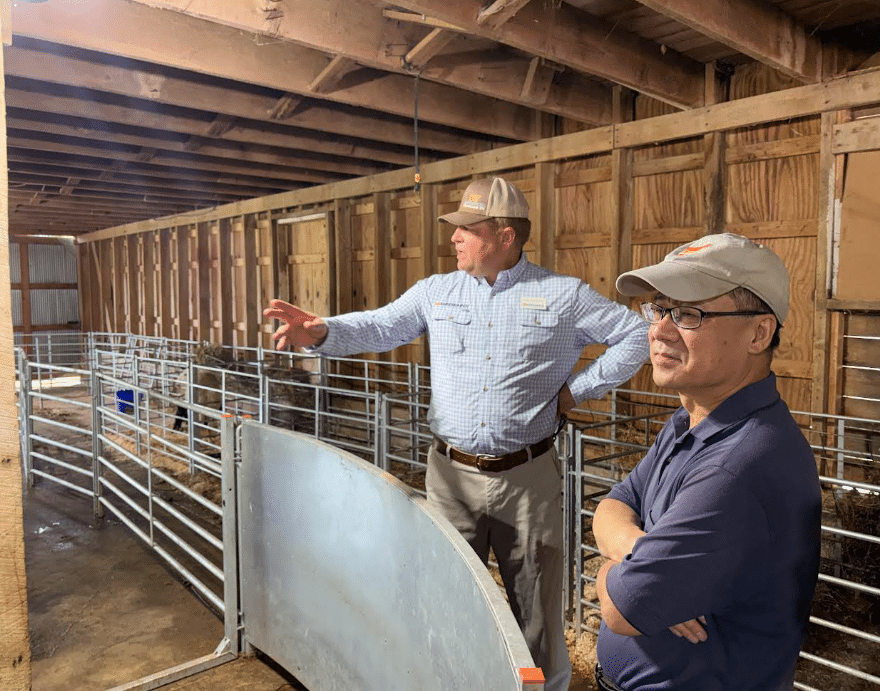
The initiative’s international network is also continuing to grow. In August 2026, a consortium of agricultural organizations across the Americas and Europe received a FONTAGRO award for the project Restoration of Soil Organic Carbon: Contribution of No-Till Systems. UT is participating as an associate institution, with Jie Zhuang and program manager Sara Mulville collaborating with the international project team.
Another recent milestone was the publication of the open-access Handbook of Circular Bioeconomy by Springer Nature in March 2026. The volume includes 28 chapters across 630 pages and features contributions from scholars in 17 countries. Zhuang served as corresponding and managing editor.